
Searching Pulaski County Criminal Dockets
Begin with whatever paper you already hold. A citation, notice, bond paper, or filing names the court. That court holds the docket. Felonies live in Pulaski County Superior Court. Michael A. King, Clerk of Superior Court, keeps the criminal docket there. The clerk's Icon WebCaseSearch greets you with UserID, password, login, and remember-user controls. There is no anonymous search by name, charge, or case number on that page.
A second route runs through Georgia Courts E-Access. That directory routes Pulaski Superior users to PeachCourt, which requires an account. If either path stalls, call the Superior Clerk at (478) 783-1911, go to 141 Commerce Street in Hawkinsville, or mail a request to P.O. Box 60, Hawkinsville, GA 31036. Ask up front about search help, copies, cost, and delivery.
- Read the court name and charge level on the document.
- For Superior matters, check E-Access and PeachCourt.
- Use Icon only with authorized login credentials.
- Check the Oconee Circuit calendar for published settings.
- Call or visit the clerk when online access stops.
Pulaski Criminal Login Limits
The Icon page can mislead people. Its name sounds like a public tool, but it is not an anonymous search form. The page publishes nothing about its historical range, refresh cycle, wildcard rules, or result fields. So a failed login or blank screen does not mean no Pulaski County criminal docket exists.
PeachCourt works differently. Georgia makes Peach Court mandatory for Pulaski Superior e-filing, and registration costs nothing. Its public pages stay quiet on which Pulaski years or case classes include images. Document-level pricing is not disclosed. Rather than guessing at an account gate again and again, fall back on the Superior Clerk.
Inside a Pulaski County Criminal Docket
Think of the criminal docket as the event index for a case. Parties, court, charge, filed papers, settings, orders, plea, trial result, and disposition may all appear there. It is not the whole file, though. A certified judgment, sentencing order, arrest report, or jail record is something else entirely. The exact field order and local case-number pattern stay behind the login. Do not guess at them.
| Case identity | Case number, court class, filing date, and public party names. |
|---|---|
| Charge record | Accusation or indictment information and later changes when shown. |
| Settings | Arraignment, motions, bond, revocation, plea, or trial events. |
| Entries | Motions, notices, returns, orders, and other filed events. |
| Outcome | Plea, verdict, dismissal, sentence, or other disposition. |
Type the case number exactly as printed. Never force it into a made-up format like YYYY-CR-#####. The clerk can confirm punctuation and leading zeros.
Pulaski Criminal Terms Calendar
For Pulaski Superior settings, the Oconee Judicial Circuit calendar is the clearest open source. Pulaski entries include Criminal Term, Arraignments, Revocations/Bonds, Revocations/Bonds/Pleas, and Criminal Calendar. Entries are sorted by date, judge column, county, label, and time. Treat these as session labels rather than a full party-by-party criminal docket.
Each label marks a stage. Arraignment is when charges are addressed and a plea may be taken. A bond or revocation setting deals with release terms or claimed violations. One label contained "CMJ," which the source does not define. The circuit itself warns that calendars are general guides. Confirm the current date and time with the clerk.
How a Criminal Case Moves
A Pulaski County felony can begin with a warrant or preliminary event. That can happen before it ever reaches Superior Court. Once filed, the charge may be followed by arraignment, motions, bond proceedings, pretrial settings, a plea or trial, and disposition. Not every case hits every step. A reset only moves a setting. It does not dismiss the charge or erase the case.
Docket flow: Filing › Arraignment › Pretrial › Plea or Trial › Disposition › Sentencing
After disposition, the file may hold a sentencing order or appeal notice with more detail than a short docket line. Many appeals start in the Georgia Court of Appeals, while classes set by law go to the Georgia Supreme Court. When an event label is unclear, ask for the filed document.
After a Pulaski Criminal Reset
If a setting moves, read the latest docket entry. Then contact the office that set it. The local calendar page posts nothing usable, and the circuit PDF may miss a late change. Keep the case number, prior date, new date, and setting type close at hand. Ask whether a new notice or order was filed.
A reset is not a dismissal. Confirm the new Pulaski County criminal docket setting with the clerk or court coordinator before the date.
Courts That Hold Criminal Dockets
Pulaski County has no separate State Court. Superior Court holds the felonies. Magistrate Court handles warrants, minor criminal matters, and warrant pre-applications. Its office sits at 45 South Lumpkin Street, Suite 105, reachable at (478) 783-1357. Juvenile Court handles delinquency and other juvenile matters. Clerk functions sit under the Superior Clerk, but access is restricted.
Probate Court at 141 Commerce Street matters too, because Georgia lets probate judges in counties without State Court hear certain traffic and misdemeanor matters within limits; call (478) 783-2061. Hawkinsville Municipal Court separately keeps city ordinance and traffic matters at City Hall, (478) 892-3240. Send every inquiry to Superior Court and you will miss these dockets.
Pulaski Felony and Traffic Split
Where a case sits depends on the charge. Felonies live in the Superior Clerk's docket. A state-law traffic citation may land in Probate Court instead, and a Hawkinsville ticket may belong to Municipal Court. Check the court name printed on the ticket before you search anywhere. Georgia's ticket page warns that a citation can take 7 to 21 business days to show up online, so a failed early search does not mean the ticket was never filed.
None of those Probate or municipal tools replaces the Superior criminal docket, and PeachCourt is not the first stop for every ticket. The Pulaski traffic ticket record page walks through those routes. Still, the issuing court is the final source.
The split matters when you read an outcome too. A traffic payment, a municipal disposition, or a Probate judgment belongs to the court that entered it, and it will not always show up as a Superior criminal event. When a case starts in a lower court and later moves, ask both offices which docket holds the operative order and whether a new case number was assigned. There is no universal transfer-number pattern.
Sealed Dockets and Public Access
Plenty of adult criminal docket entries are open court records, but access has real limits. Georgia law keeps juvenile records confidential. Sealed filings and restricted personal data do not become public just because another entry in the case can be viewed. Record restriction can limit access to an eligible criminal history, yet it does not promise that every court record disappears.
The Georgia Attorney General explains that court records are public, but Superior, Probate, and Magistrate courts are not treated as agency requests under the Georgia Open Records Act. Court rules and clerk procedures govern instead. A good request names the court, the case number if known, the parties' names, the record type, the date range, and whether you want a plain or certified copy.
Access rules: Georgia Courts explains record restriction, while its judicial-security process addresses qualifying personal information. The clerk applies court rules and orders.
Pulaski Criminal Access Sources
The Attorney General's open-government guidance supplies useful context for routing requests.
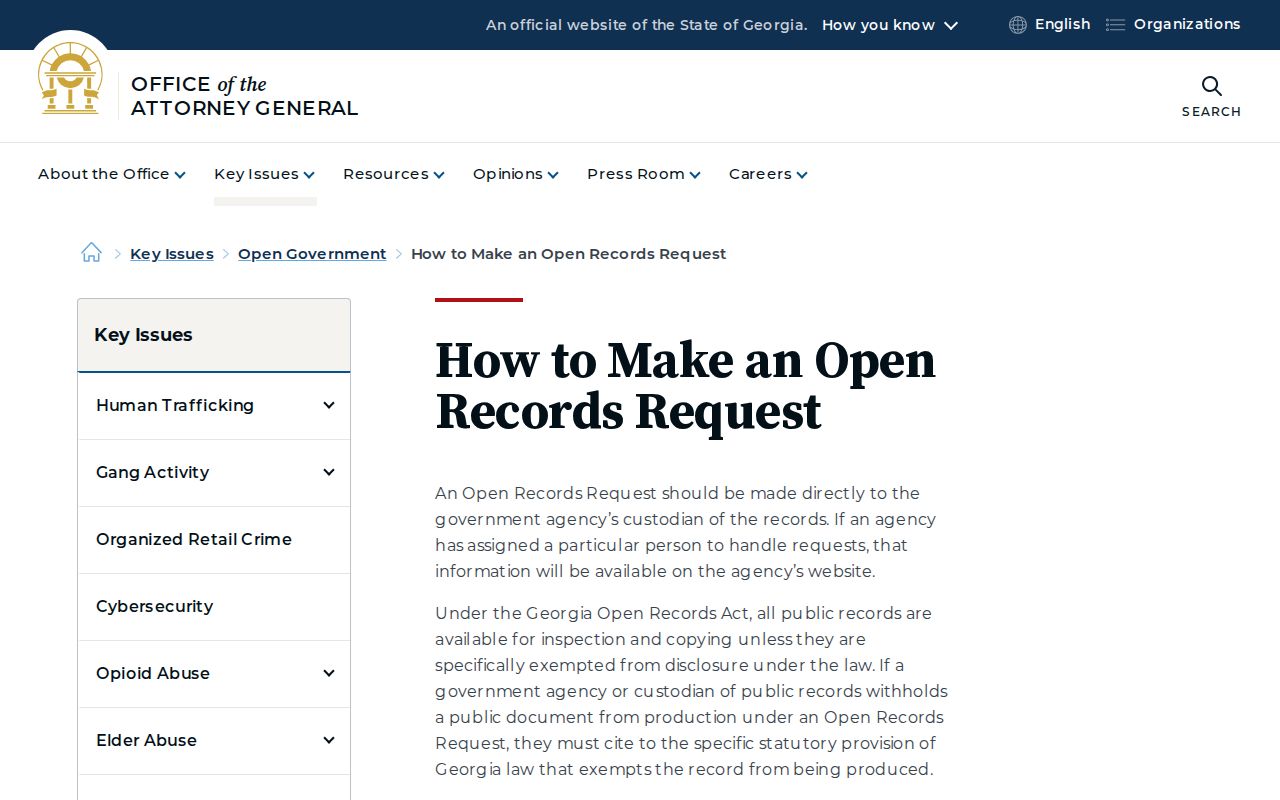
For Pulaski court records, send the request to the clerk who owns the docket. Ask what court-specific process applies. Name the court and the item you want, such as a docket printout, indictment, order, disposition, or certified judgment. Give a date range and any known case number. Ask whether staff must research the file, how many pages are involved, and which forms of payment the office accepts. Pulaski offers no online certified-copy form and no fixed turnaround promise.
The Georgia Courts restriction resource explains the state's expungement and record-restriction rules. Its official page holds the details.
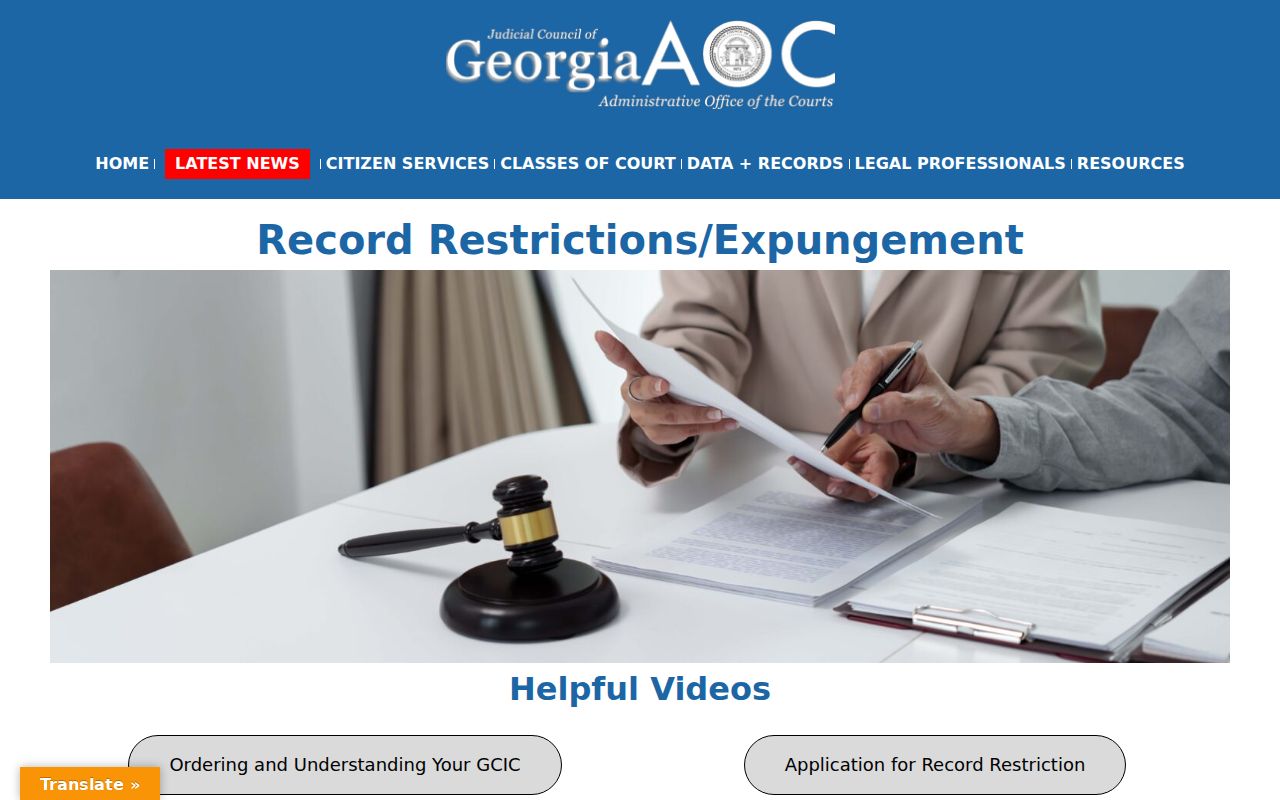
That process concerns legal access, nothing more. A portal result does not become a ruling that a Pulaski docket is sealed. It does not replace a certified court disposition either. If a short docket status seems to clash with a later order, ask the Superior Clerk for the filed order and the certification options. For a matter in Probate, Magistrate, or Municipal Court, contact that office directly rather than asking the Superior division to certify another court's file.