
Getting Pulaski County Court Records
Name the court and the document in any request. Michael A. King, Clerk of Superior Court, manages the Superior and Juvenile files. Probate Judge Jeffrey Jones's office holds probate records and the county Probate traffic docket. Small claims, dispossessory, garnishment, and warrant files sit with Magistrate Court. Jessica Davies keeps the Hawkinsville Municipal Court records. A vague letter to all four offices may get you an answer. And it may be about the wrong docket.
Online access is only one channel among several. The clerk's Icon WebCaseSearch opens to a login screen. It offers no open name or case-number fields. Georgia Courts E-Access sends Pulaski Superior users to PeachCourt, which requires an account. When a file is old, restricted, missing online, or needed in certified form, the counter, phone, and mail routes still matter.
- Identify the court from the citation, pleading, notice, or case type.
- Write down the party name, case number, date range, and exact paper sought.
- Check the proper online route, then call the custodian if access is blocked.
- Ask whether the file is public and whether a plain or certified copy is needed.
- Confirm page count, fee, payment, delivery, and timing before sending money.
Pulaski Clerks Hold Different Files
One shared courthouse does not mean one shared filing cabinet. The building at 141 Commerce Street houses Superior, Juvenile, and Probate functions. Yet each keeps its own records. Superior files cover felonies, major civil suits, divorce, habeas matters, and appeals from limited courts. Juvenile records share the same elected clerk but face strict confidentiality. Probate runs its own counter. It handles estates, wills, guardianships, licenses, vital records, and qualifying traffic matters.
Magistrate Court sits in the Courthouse Annex at 45 South Lumpkin Street, Suite 105. Its files include claims up to $15,000. Other proceedings are listed on the local court page. Hawkinsville ordinance and city traffic files belong at City Hall, 56 Broad Street. A city ticket is not a Probate record just because both courts hear traffic cases. The court printed on the paper controls.
Pulaski County Court Record Types
Each item serves a different purpose. A docket is the dated index of case activity. The case file holds the pleadings and court papers behind those entries. A calendar lists scheduled settings. Naming the exact item you want helps the clerk quote the right fee and spares you from ordering a large file when one signed order will do.
- Docket sheets and entry histories.
- Pleadings, motions, answers, affidavits, and filed attachments.
- Signed orders, judgments, sentences, and dispositions.
- Public probate petitions, letters, inventories, and estate documents.
- Magistrate complaints, writs, garnishment papers, and outcomes.
- Municipal citation and ordinance records kept by Hawkinsville.
Transcripts are a separate matter. A court reporter creates and certifies them. The clerk may hold a filed transcript but does not produce one from a hearing by default. Physical exhibits may sit with another custodian or require an access order.
PeachCourt Is Not Certification
Georgia Courts names PeachCourt the mandatory e-filing system for Pulaski Superior Court. Its access page covers civil and criminal filing along with document access, and registration is free. What the public pages do not state is which Pulaski years have scanned images, whether every docket view is free, or what a chosen document costs.
Myth: An online image is automatically an official certified record.
Fact: Certification is the clerk's attestation. Request it when an agency or court process requires an authenticated copy.
The Georgia E-Access directory routes people to providers rather than serving as one statewide name-search database. Compare provider data with the originating clerk. Use the Pulaski County case lookup to identify a file before ordering it.
Inside a Pulaski Court Record
No open Pulaski sample register exists to study, so guessing at a local case-number pattern would be a mistake. The common components described here can still help frame a request. They do not promise that each item is public or appears in every file.
| Case identity | Court, assigned number, case type, and public party names. |
|---|---|
| Docket sheet | Dated entries indexing filings, settings, orders, and disposition. |
| Pleadings | Complaints, petitions, answers, motions, and related papers. |
| Orders | Signed rulings, judgments, sentence, or other disposition. |
| Service | Returns, certificates, and notices placed in the file. |
| Protected matter | Sealed papers or confidential data withheld from public copies. |
A calendar entry shows that a setting was planned. It does not replace the current docket or the signed order. The Oconee Judicial Circuit warns that calendars are general guides, so confirm dates with the clerk.
Pulaski Written Record Requests
Send the request to the office holding the named court's records. Include your contact details, the court, and the case number if known. Add public party names, the approximate filing date, and the document title. Say whether you want a plain or certified copy. State a preference for inspection, paper copies, or electronic delivery. Ask for an estimate before work begins.
Court files follow court rules, not the executive-branch Open Records Act process. The Georgia Attorney General explains that records of Superior, State, Probate, and Magistrate courts do not use that agency route. The Attorney General's guidance helps with county administrative records. But a pleading goes to its clerk. Pulaski publishes no judicial-record response deadline, email rule, or drop box.
Fees and Certified Copies
A plain copy just reproduces a page. A certified copy carries the clerk's official certification. The GSCCCA Superior Clerk reference publishes a statewide schedule, while local Probate and Magistrate sources publish other rates. Ask which schedule and added service applies.
| Record service | Published amount |
|---|---|
| Superior copy without clerk help | $0.50 per page |
| Superior copy with clerk help | $1.00 per page |
| Superior transmitted copy | $2.50 first page; $1.00 added page |
| Superior certified copy | $2.50 first page; $0.50 added page |
| Probate copy | $1.00 per page |
| Probate certification under seal | $10.00, copies excluded |
| Magistrate copy | $0.25 per page |
Pulaski County Superior Court Clerk
141 Commerce Street, P.O. Box 60
Hawkinsville, GA 31036
Monday-Friday, 8:00 a.m.-5:00 p.m.
(478) 783-1911
The clerk site displays 350 Commerce Street, while the current GSCCCA profile and local directory give 141 Commerce Street. No certified-copy cutoff or full payment list is published, so call before travel.
Pulaski eCertification Availability
GSCCCA runs an online eCertification service. Pulaski is not on the participating-county list. That does not stop the local clerk from certifying a record; it means the online service should not be assumed available. The official eCertification portal shows the statewide service.
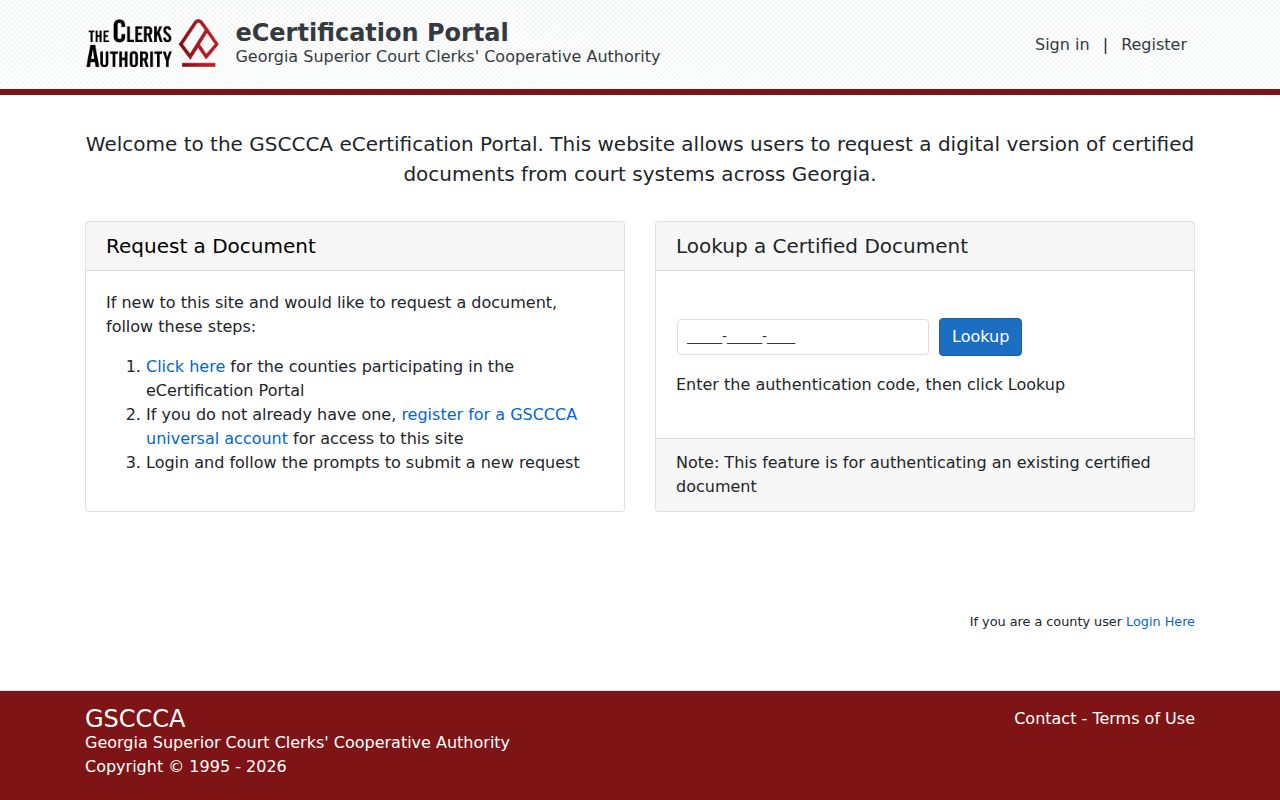
Rather than treating a provider page as proof of county coverage, Pulaski requesters should call the clerk. The clerk can give the current certification path.
Federal Records From Pulaski
Federal cases from Pulaski County never touch the county courthouse. They belong to the Middle District of Georgia instead. PACER handles the searching. Bankruptcy goes through that district's Bankruptcy Court. PeachCourt plays no part in either one. The official PACER court lookup shows which district route a case takes.
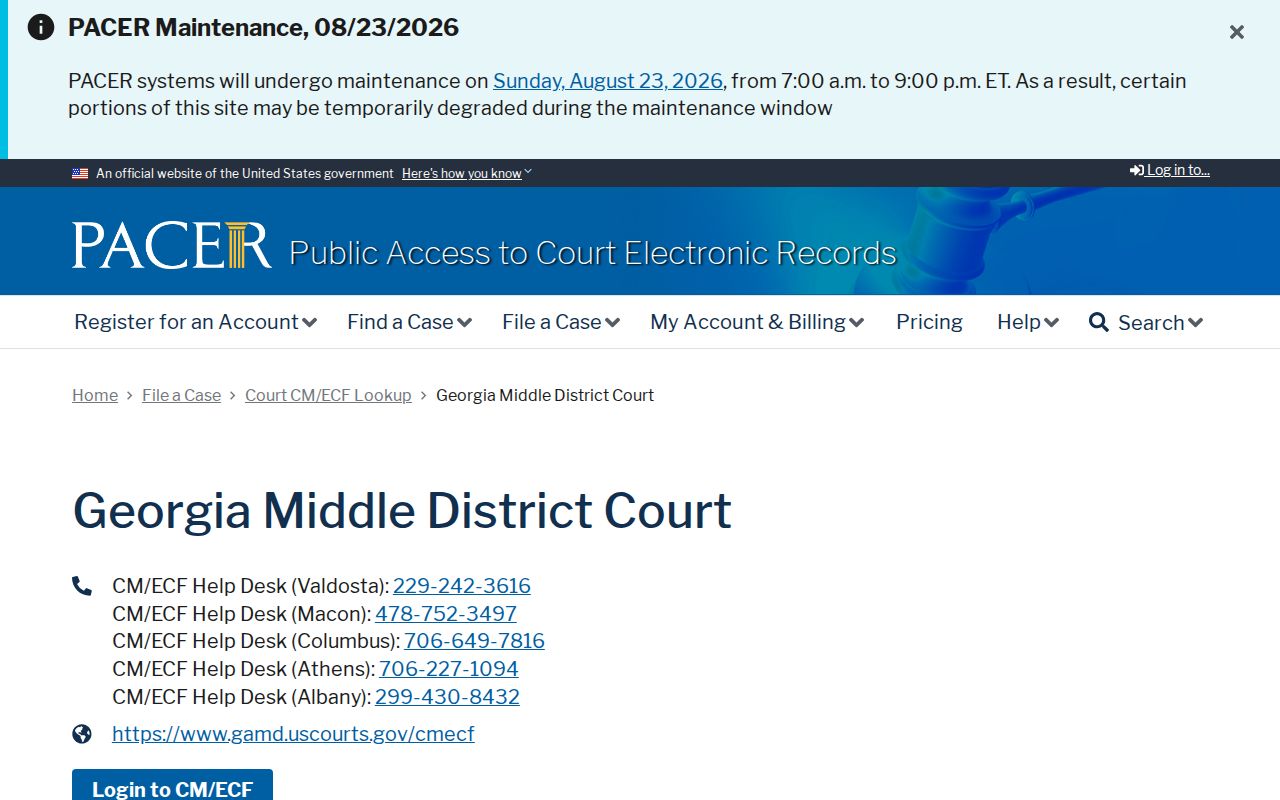
This federal note saves you a wasted trip to the Pulaski clerk, since the original file sits in a federal court. For bankruptcy, the Middle District Bankruptcy Court is the official channel.
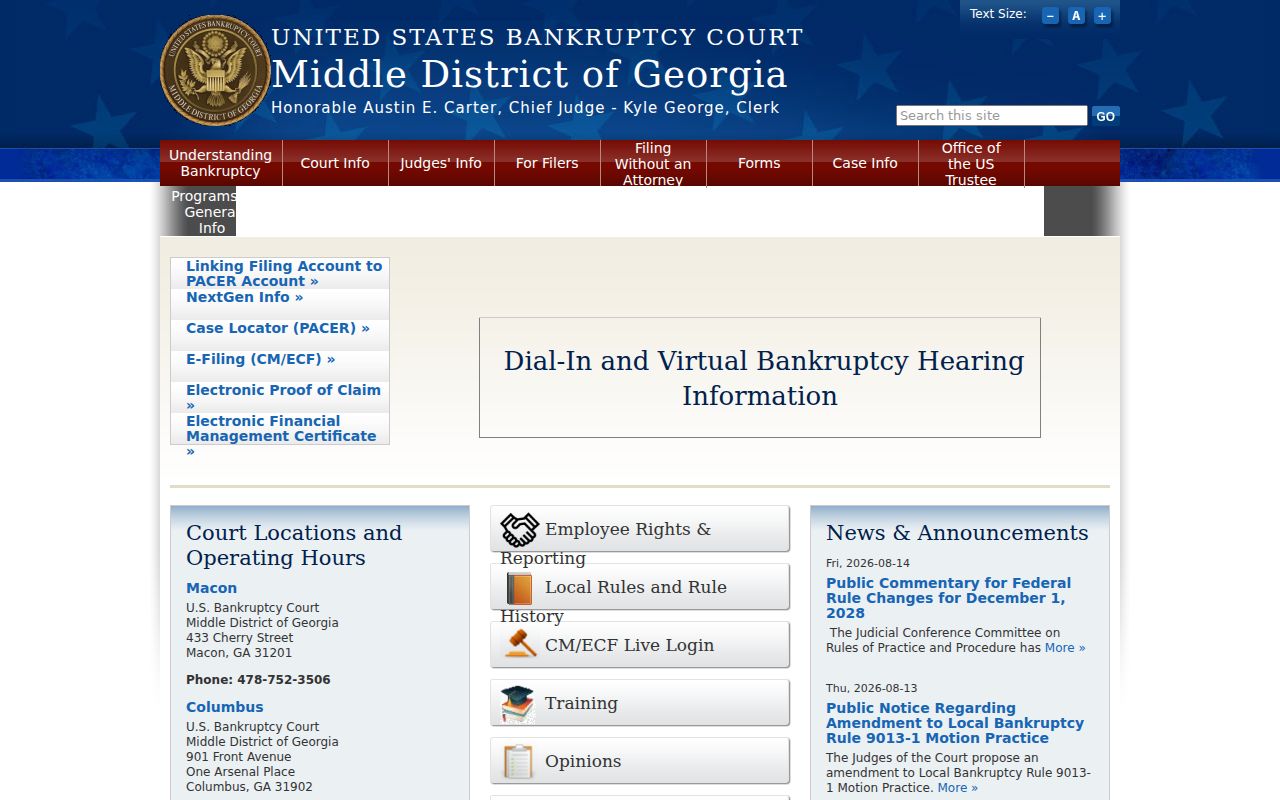
A Pulaski address does not turn a bankruptcy petition into a county court record.
Sealed Records and Public Access
Plenty of docket entries and filings are open to anyone. Still, access has limits. Uniform Superior Court Rule 21 sets the rules for restricting file access. Juvenile matters carry their own confidentiality rules. Record restriction can narrow what a criminal history shows without erasing every old court record. There is also a newer protection. Since July 2025, qualifying judicial officers and their spouses can ask to restrict certain personal identifying data under Georgia's judicial-security law.
Key rule: The Uniform Superior Court Rules govern Superior Court file access. The Georgia Open Records Act does not replace the court's own procedure.
If protected material is in a file, request the public version. A redaction hides the identifier and leaves the rest open. One caution, though. A clerk cannot hand over a sealed page just because its title shows on a docket, and the absence of an online image does not mean the whole case is sealed.